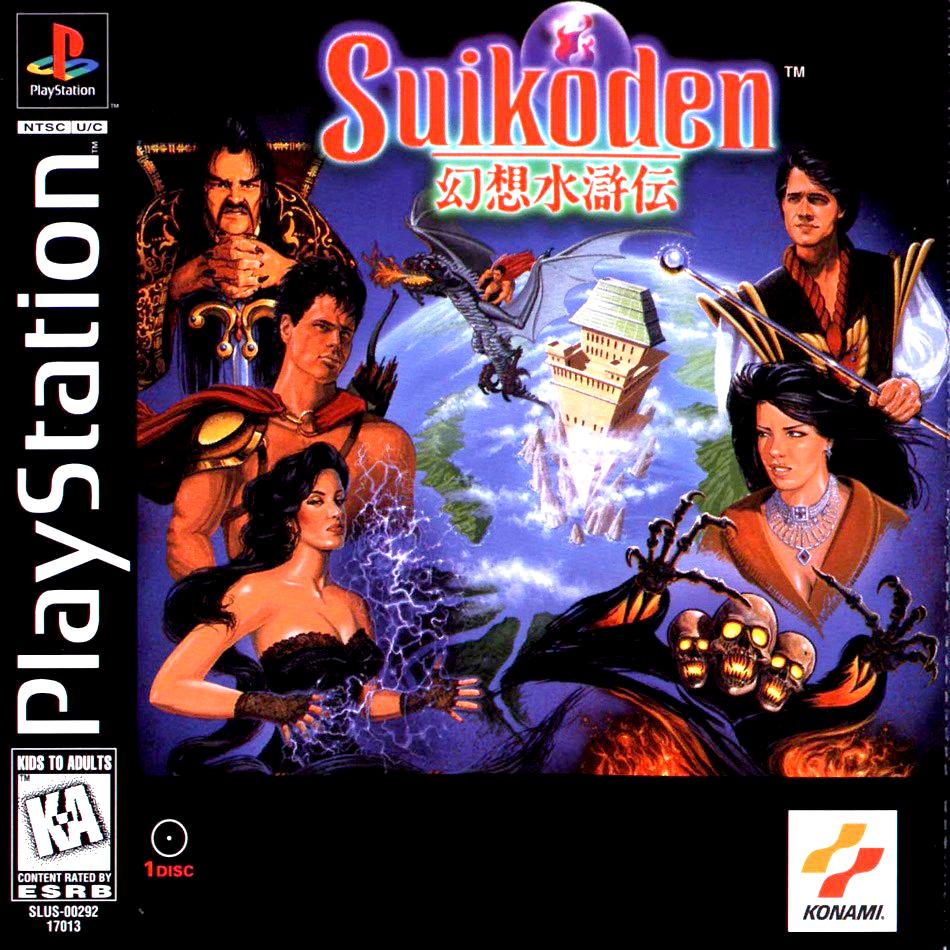
So over at the Reyvateil's Melody forums, LOKFanatic put together a side-by-side comparison of the Japanese and American box art for various NISA-released GUST games.
To be honest, I'd quite forgotten that AT1 had had a different cover, and to see the comparisons illustrated so starkly kind of shocked me. I think I'd subconsciously believed that we were past the days when covers were routinely changed for the American market, even though in practice I know things like the Final Fantasies get different covers (and I'm still not entirely sure why). The anime style of art and the Japanese aesthetic in general is so widely recognised amongst gamers now, and in fact beloved for its charm, that monstrosities like these unfortunate localised covers are looked upon as quaint relics of a less culturally aware era. Given that, I'm honestly not sure I see a need for revised covers. Isn't it just more expense on the developers' part?
Moreover, the aesthetic appeal of the Japanese designs aside, I'm troubled by the assumptions the changed covers seem to make about the two cultures. The Japanese covers for both AT1 and 2 prominently feature the female characters, who are of course the stars of the story, looking non-sexualised and in control. Sure, Chroche has got a bit of cleavage going on, but that's just her outfit in general; she looks composed and refined, not like she's posing for the cover of the Metafalss edition of Hustler. The emphasis is on the women, but not in a degrading way, so as to objectify them; rather, it's on them as the most important people on the box. They look like the protagonists, basically, not sidekick material: AT1 is obviously Aurica and Misha's game, just as AT2 is obviously Chroche and Luca's
Contrast with the American covers. AT1's wasn't too awful, and the first release was pink, which is quite a novelty amongst games not aimed at little girls, although it probably did put a lot of people off the game and definitely gendered the content. The original looked like a game that anyone might want to play; the American cover appealed to a niche, which is a counterproductive marketing strategy if ever I saw one. The biggest problem with it, though, is that the female characters have been pushed to the back. The message is clear: this game is about a guy with a sword and his singing, alluring female cohorts!
AT2's cover, however... ugh. Not only is the guy with the pointy thing in front again, but the background image is of the main female protagonists practically making out, and looking kind of nervous and vulnerable (well, okay, Chroche does) while they do so. The message here is clearer still: this game is about a guy with a sword and his two vaguely homoerotic female cohorts! Now, I have absolutely no problem with gayness in my games-- I'm bi myself, and it's always nice to see games that feature a wide spread of sexualities-- but this isn't about fair representation of lesbians, especially since I'm pretty sure from what I've heard (don't confirm/deny/spoil in comments, people!) that Chroche and Luca aren't actually together in the game. This is about putting female eroticism on the cover of a game so it will sell to men who want to look at that sort of thing. And, you know, that's not bad as such. There's nothing wrong with men who like looking at pretty girls. But save it for the artbook; placing it on the cover distorts the image of what the game's about. Ar Tonelico is about much more than thinly veiled sexuality, and selling the game like this cheapens it, as well as reducing the female characters to objects to be gazed upon, not people in their own right. If there's anyone out there you think needs a quick example of what objectification is, link them to this post: I think it's as good an example of the difference between presenting a person as a person, a being capable of independent agency, and presenting them as an object, a thing to be observed and enjoyed with the eyes with their own will seen as secondary, as you'll find.
The big problem I have with these covers is what they say about what games companies think of American fans. They assume the American gamer market is so crude, so adolescent, and, most galling of all, so overwhelmingly male, that they a) won't buy a game that has women shown as key characters in their own right, rather than sex objects, and b) would buy a game with two girls fawning all over each other on the cover over a game that seems to be a pretty, tasteful-looking RPG. Those are two awful assumptions to make about America, especially in contrast to Japan-- "the Japanese may like the tasteful stuff, but here in the good ol' U. S. of A., we want boobs! None of this fancy cherry-blossom-haiku-tea-ceremony stuff for us, no sir!"-- and, in light of the controversy over name localisations and NISA's recent commentary in press release that "the American market is different, and we have to cater to it", really makes it seem like they think the American market is stupid. Those durned Amerikkuns, they hate Japanese names in games, and they hate pretty, delicate things! That's right: the portion of the American market that plays games like Ar Tonelico seriously hates, you know, pretty fantasy worlds and those ker-ray-zee Japanese names. Yep. We hate it. We're just here for the Reyva-tail.
Uh.
Please meditate upon this link, NISA. Come back to us when you're done. (Warning: music and Flash, for those of you at work. Just check the URL.)
I'm buying AT2 because I want to play it in English, on release day. Furthermore, I want to support NISA over the fact that AT2 is being released here at all, and hopefully get AT3 released as well. So I'm giving them my money. But it's a dilemma, because honestly, I don't like the thought of supporting companies that pull this sort of stunt. At the risk of sounding elitist here, the AT series has been stated by some of the developers to be their life's work. Sure, it has innuendo, but that's not the main attraction; you can see that in the multiple 250-page books that have been released detailing every aspect of the world's history, technology and magicology that barely say a peep about the characters as sex symbols. Turning the characters of this carefully constructed fantasy into cheap tricks to sell games to your perceived market of Dumb Horny Amerikkuns is not okay, okay?
In conclusion: when a country like Japan, notorious for its objectification of the female figure and general lack of feminism, does a far better job than the American distros of presenting its female characters as characters in their own right rather than bits of fluff attached to the male protagonist, you know someone, somewhere, is seriously doing it wrong.
In other news, $INSERT_WINTER_HOLIDAY_HERE is almost upon us, and I'm off to spend it with one awesome individual, several rather less tolerable individuals, and a NEW TINYKITN as of tomorrow. My internet access is going to be minimal, most likely, so don't expect posts from me on this blog or the forums from the 23rd until New Year's; the Reyvablog will also be going on a hiatus until January 1st, which, given timezone crossing and need to recover from jetlag, will in practice probably work out at around the 2nd or 3rd. So have yourselves a merry little season, and I'll join you all again in 2009 for the last leg of our collective wait for the airship to Metafalss!